

Brushing your cat’s teeth is the most effective way to reduce plaque, prevent tartar buildup and keep your cat’s mouth healthy for years. It helps prevent many dental diseases and keeps your cat’s breath fresh. How do you get a kitten used to tooth brushing? How often should you do it, and how? Which products and tools should you use? You’ll find answers to all these questions in this article.
Do Cats Need Their Teeth Brushed?
No owner can guarantee their cat will never need dental treatment. But anyone can improve the health of their cat’s mouth and reduce the need for unpleasant, painful and expensive dental procedures. Regular brushing of your cat’s teeth and gums is an important part of care that improves its quality of life.
Why Brush Your Cat’s Teeth?
Most cats show signs of dental disease by the age of 3; vets estimate that 50–90% of cats over 4 have some form of it.
Without proper cleaning, plaque made of food particles, bacteria and their by-products builds up on the teeth. Over time, plaque hardens (calcifies) into tartar, which is hard to remove. This irritates the gums and can lead to dental problems:
- gingivitis;
- stomatitis;
- periodontal disease;
- tooth resorption (painful lesions that destroy the tooth, very common in cats);
- tooth loss.
Cavities, by the way, are rare in cats; the bigger threats are gum disease and tooth resorption.

Regular brushing also prevents bad breath in cats.
Bacteria from dental plaque can enter the bloodstream and may contribute to damage to the kidneys, heart and other organs.
How to Brush Your Cat’s Teeth
Now that we know why it matters, let’s talk about how to brush your cat’s teeth and gums at home, how often to do it and when your cat needs a professional cleaning.
How Often to Brush
At home
We know it’s hard to find the time. But there’s good news: a toothbrush and toothpaste aren’t the only options anymore, and we’ll tell you about alternatives below. Dental care matters at every age, since plaque starts forming in the first months of life.
Professional cleaning
Cats with sensitive gums or teeth in poor condition may need professional care more often. Your vet will tell you when your cat’s next cleaning is due.
What You’ll Need
To clean your cat’s teeth safely and effectively, get:
- a soft-bristled toothbrush made for cats (available at pet stores and vet clinics);
- a silicone finger brush;
- a pet toothpaste in a flavor your cat likes (poultry, seafood or malt);
- soft cloth or gauze pads.
Never use human toothbrushes, toothpaste or mouthwash on your cat. Human toothpaste often contains fluoride and xylitol and isn’t meant to be swallowed, so it isn’t safe for cats.
How to Brush Your Cat’s Teeth at Home

Start when you’re calm and in a positive mood. Cats pick up on their owners’ emotions: if you’re anxious and unsure, your cat will get nervous too.
- Sit next to your cat and pet it gently, touching its face, cheeks and the area around its mouth.
- When your cat is relaxed, give it a treat.
- Dip your finger in your cat’s favorite wet food or a lickable treat and let your cat lick it off.
- Gently touch your cat’s gums with your finger. Go slowly so your cat doesn’t get nervous.
- Put a little pet toothpaste on your finger, let your cat lick it, and then rub some on its gums.
- Next, put a little toothpaste on a cat toothbrush and gently brush a few teeth. To expose the teeth, carefully lift your cat’s upper and lower lips. Brush along the gum line with small circular motions.
- Start with the back teeth (where tartar builds up most) and gradually move toward the front.
- If your cat doesn’t resist, keep brushing the rest of its teeth. You only need to brush the outer surfaces: your cat’s tongue takes care of the inner ones.
- If your cat dislikes the toothbrush, try using a damp gauze pad wrapped around your finger.
- Take breaks for petting and treats, and keep praising and encouraging your cat.
- If your cat won’t cooperate and fights back, ask someone to help hold it or wrap it gently in a towel (“kitty burrito” style).
Take as much time as your pet needs to get used to tooth brushing. Don’t rush, and don’t scold your cat if it resists. The goal is to build a positive attitude toward brushing. If your cat associates it with something pleasant, it will get used to it quickly and easily.
When to Start Brushing a Kitten’s Teeth
Cats don’t like people poking around in their mouths, so start getting them used to it as early as possible. Don’t put it off: as soon as your kitten comes home, start the training. Kittens lose their baby teeth at about 3–6 months, and their gums can be sore while the adult teeth come in, so be extra gentle then. If you start early, you’ll be able to brush your adult cat’s teeth without any trouble.
Be consistent but don’t hurry. If your cat seems stressed, take a few days’ break from training.
An Easier Alternative: Dental Wipes

An alternative way to clean your cat’s teeth and gums is with disposable dental wipes. This is the easiest method: just wrap a wipe around your finger and rub it over your cat’s teeth and gums. Throw away the wipe afterward; they’re single-use.
Dental wipes are soaked in ingredients that help remove plaque and prevent bad breath. This method saves time, but you pay for the convenience: a pack usually costs about $8–$15. Many pet brands sell dental wipes for cats, available at pet stores, Chewy and Amazon in the US, and at Pets at Home in the UK.
Brushing at home doesn’t need to take more than about 30 seconds to a minute a day.
Professional Dental Cleaning
A professional dental cleaning at the vet removes plaque and tartar from all the teeth, including below the gum line, using an ultrasonic scaler, followed by polishing. Vets usually also take dental X-rays, because much of a cat’s dental disease (like tooth resorption) is hidden below the gum line.
The procedure is done under general anesthesia. Here’s why:
- to protect the cat from stress and pain;
- to keep the cat still;
- to avoid injuring the mouth;
- to keep water and debris from getting into the windpipe (the cat is intubated);
- to allow the vet to examine and clean every tooth thoroughly and take X-rays.
A routine cleaning usually takes about 30–60 minutes, longer if teeth need to be extracted. Your vet will tell you how long to withhold food beforehand (usually overnight). In the US, a professional dental cleaning usually costs about $300–$1,000 or more, depending on the clinic and whether extractions are needed; anesthesia-free “cleanings” aren’t recommended by veterinary dental specialists, because they can’t clean below the gum line.
What to Use to Clean Your Cat’s Teeth
Pet stores offer a wide range of cat toothbrushes and toothpastes. Ask your vet to recommend products that suit your cat’s teeth and gums. In the US, look for products with the seal of the Veterinary Oral Health Council (VOHC), which means they’ve been proven to reduce plaque or tartar.
Toothpastes

There are two main types of pet toothpaste:
- therapeutic (for cats with existing gum problems, usually recommended by a vet);
- preventive (for everyday use).
Popular cat toothpastes include:
- Virbac C.E.T. Enzymatic Toothpaste. A vet favorite that comes in poultry, seafood and malt flavors. It contains enzymes that help control plaque and doesn’t need rinsing. Usually about $10–$15.
- Petrodex Enzymatic Toothpaste. Poultry flavored and widely available in the US. Usually about $6–$10.
- Vetoquinol Enzadent Enzymatic Toothpaste. Poultry flavored, with enzymes to fight plaque. Usually about $8–$12.
- Beaphar Toothpaste. A popular option in the UK and Europe, liver flavored, freshens breath and helps prevent plaque and tartar. Usually about £4–£7.
- Logic Oral Hygiene Gel (Virbac). An enzymatic gel that works even if you can only apply it to the teeth without brushing. Usually about $15–$20.
Toothbrushes

There are two main types of cat toothbrushes:
- brushes with a handle and soft bristles;
- finger brushes.
Look for:
- Small, double-ended cat toothbrushes with very soft bristles (many brands, such as Virbac C.E.T. and Petrodex, sell them). Usually about $4–$8.
- Silicone finger brushes, which many cats accept more easily. Usually about $3–$6 for a pack.
- Dental kits that include a toothpaste, a toothbrush and a finger brush (for example, from Petrodex or Virbac). Usually about $10–$20.
Other Dental Care Products
Besides toothpaste and toothbrushes, there are other products that help keep your cat’s mouth clean and healthy.
Dental Gels
A gel is a handy option when you can’t brush with a toothbrush and toothpaste. Gels are easy to use: just apply a few drops to your cat’s teeth. As your cat licks its lips, the gel mixes with saliva, which helps it spread. The active ingredients help soften and remove plaque. To make it more effective, you can also wipe your cat’s teeth with a soft cloth or finger brush.
Follow the product’s instructions; some gels work best if you don’t feed your cat for about 30 minutes before and after applying them.
Oral Sprays and Water Additives

Another convenient option is an oral care spray or a water additive that you mix into your cat’s drinking water. These are ideal for aggressive or stubborn cats that won’t let you brush their teeth. The active ingredients help fight plaque and freshen breath. They’re less effective than brushing, but much better than nothing. Usually about $10–$20. (Introduce water additives gradually: some cats drink less if they don’t like the taste.)
Dental Diets
For cats with dental problems or gum inflammation, there are special dental foods. Most leading brands have them. Some use large, specially textured kibble that scrubs the teeth as your cat chews; others are formulated to slow tartar buildup. Popular dental foods include:
- Hill’s Prescription Diet t/d Dental Care (prescription);
- Hill’s Science Diet Oral Care;
- Royal Canin Feline Dental (prescription);
- Purina Pro Plan Veterinary Diets DH Dental Health (prescription);
- Royal Canin Oral Care.
A vet should choose and prescribe a therapeutic dental diet. Don’t switch your cat to a prescription diet on your own.
Dental Treats
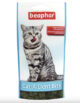
For cats that don’t eat a special dental food, dental treats can help keep their mouths cleaner. Look for VOHC-accepted treats, such as Greenies Feline Dental Treats. Usually about $5–$10 a bag. Remember that treats add calories, so they shouldn’t make up more than about 10% of your cat’s daily diet.
Dental Toys
Chew toys help remove food stuck in the teeth and clean the mouth without stress or effort on your part. Most are made of soft rubber or fabric, and some contain catnip to attract your cat. As your cat chews, the toy helps clean its teeth and massages its gums. Dental toys are also great for teething kittens, because chewing soothes sore gums.

Popular options include textured dental chew toys and catnip-filled dental toys from brands such as Petstages. Usually about $5–$10.
When Not to Brush Your Cat’s Teeth
In some conditions, brushing can be uncomfortable and painful for your cat. Don’t brush without your vet’s advice if your cat has:
- tooth resorption (destructive lesions on the teeth);
- feline gingivostomatitis (severe gum and mouth inflammation);
- red, bleeding or very sore gums, broken teeth or a mouth it won’t let you touch.
Your vet should examine your cat’s mouth and decide whether it’s safe to brush. Signs of mouth pain include drooling, dropping food, chewing on one side, pawing at the mouth and bad breath.
Sources:


